
Issue 01
Search results do not communicate the content accurately
The roles of titles, descriptions, canonical URLs, structured data, and sitemaps are not clearly defined.
Site quality / Quality Improvement
Rather than optimizing only for search engines, users, or operators, we review the current architecture and measurements to prioritize improvements across all three.

Starting point / 01
Quality improvement does not end with a one-time audit or configuration change. We review page roles, analytics and external scripts, update frequency, and the publishing flow, then make changes in stages while documenting the impact and review method.
Issue 01
The roles of titles, descriptions, canonical URLs, structured data, and sitemaps are not clearly defined.
Issue 02
Multiple factors overlap, including images, CSS, fonts, analytics tags, and caching.
Issue 03
Quality areas are treated in isolation—for example, a visual adjustment breaks focus visibility or contrast.
Prices are tax-inclusive estimates. External service fees, license fees, server costs, and changes after formal requirements are confirmed separately.
Scope / 02
We tailor the scope to the need, whether it is an audit only, correction of specific items, or a comprehensive pre-launch review.
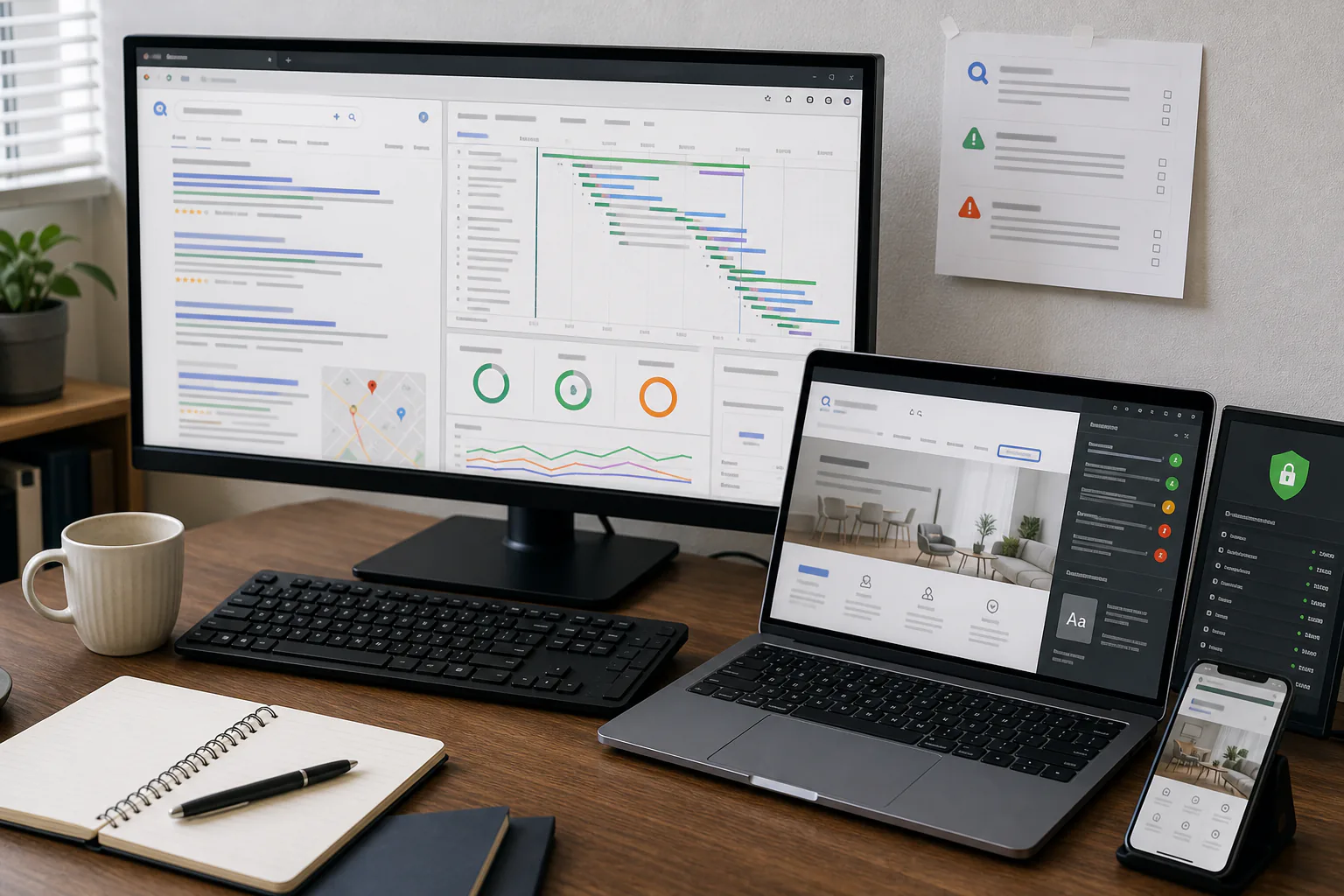
01
We define each page's role and make the information shown in search results and social sharing consistent.
SEO and Structured Data From ¥50,000
02
Using actual pages and measurements, we isolate what delays initial rendering and address the highest-impact areas first.
Page-Speed Improvement From ¥50,000
03
We inspect keyboard operation, screen-reader output, contrast, form guidance, and related areas and correct barriers to use.
Accessibility Improvement From ¥50,000
04
We inventory external connections required for publication and organize per-page delivery settings and CSP, including for admin interfaces.
Security Headers/CSP From ¥30,000
05
Instead of stopping at a successful build, we establish procedures for checking key screens, mobile layouts, links, forms, and differences in the published environment.
Requirements and Technical Consultation Custom estimate
Estimated after confirming the targets and required validation scope.
Process / 03
Because quality goals can conflict, we document the reason for each change and its review results.

Step 01
We confirm the important pages, users, business goals, and current metrics of concern.
Step 02
We identify problems and their impact from the code, generated HTML, measurements, and real interaction.
Step 03
Considering benefits and risks, we correct the highest-impact items in stages.
Step 04
We check desktop and mobile, Preview and production, and share the ongoing inspection method.
Technical notes / 04
Acecore Systems technical articles explain the background and review points for individual measures.
Note 01
An overview of the roles and implementation of JSON-LD, OGP, sitemaps, and RSS.
Note 02
Examples of improvements to CSS, fonts, images, external scripts, and caching.
Note 03
Review points for aria attributes, contrast, focus, forms, and related areas.
Note 04
Covers security headers, CSP, caching, and Pages delivery settings.